

Unique Minaret Design
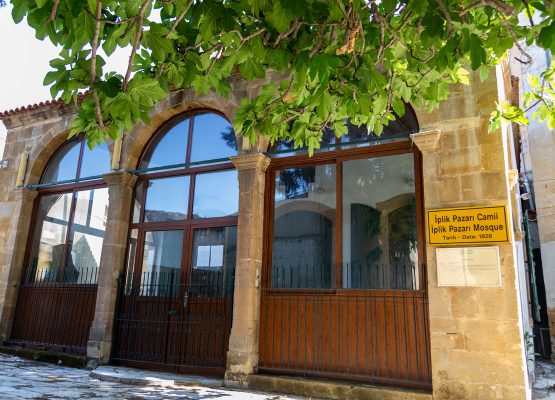
This small mosque located on Iplik Pazar Street in the walled city of Nicosia is named after the cotton bazaar that once strived at this site during the Ottoman period.
Most of what is known about this mosque are from the two separate inscriptions above the entrance door, identifying its two differing periods of build.
Its initial construction was sponsored in 1826 by Hadji Ahmet Ahga, a governor of Cyprus in the early 19th century and the last to hold the pre-Tanzimat reform period title of muhassilor tax-collector. Indeed in its earlier days, the mosque was also known by the name ‘Muhassil Haci Ahmed Agha Mosque’.
It is however more so referred to by its common name, the Iplik Bazaar Mosque, making reference to the cotton bazaar that initially served at this location during the Ottoman period.
The second inscription reveals that the initial building was demolished and replaced in 1899 with the mosque that stands today, under the sponsorship of Muhammed Sadik Bey, a charitable foundation board member in the British era of Cyprus. This work was undertaken to expand the area’s mosque capacity, with an ever-increasing congregation of worshippers.
The minaret which is accessible from inside the mosque does however remain from the original Hadji Ahmet Agha structure and is only one of two designs in North Cyprus that features a stone conical top built of cut stone.
The mosque’s architecture can be described as having utilitarian character with a rectangular plan built of cut stone and rubble fillings. The wooden ceiling inside is supported by two arches and the main room is illuminated by arched windows. A wooden staircase leads to a separate area designated for female worshippers.
In the yard of the mosque is a hexagonal water fountain built in the British period. As the ground level of the yard has risen over the 20th century, the taps of the fountain have been left under the surface.
The discovery of two tombstones in a shop next to the mosque has indicated that a small cemetery once existed next to it.